
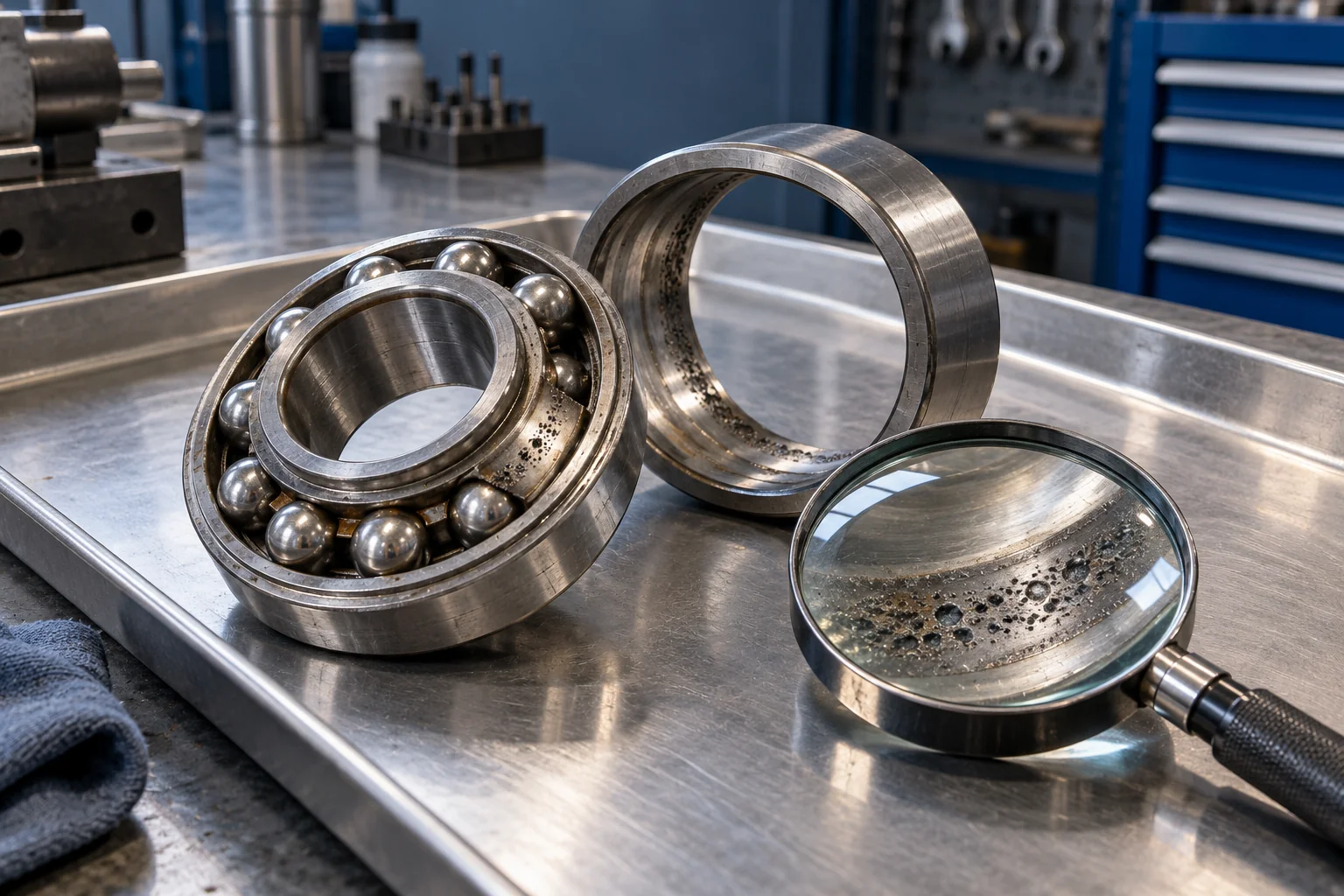
Spalling, electrical marking, misalignment and contamination can leave different patterns, yet several mechanisms may act together. Replacing the bearing without examining the shaft, housing, seals and operating conditions can repeat the failure.
Practical checks
- Record operating speed, load, temperature and symptoms before dismantling.
- Mark orientation and photograph both races, rolling elements and seals.
- Keep the lubricant and debris separate if analysis may be required.
- Check shaft and housing fits, mounting practice and lubrication history.
Record the finding against the actual part, machine or drawing revision. A useful check identifies both the observation and the conditions under which it was made, so another person can review it.
Common mistakes to avoid
- Do not clean away all deposits before documenting their position.
- A damaged bearing does not by itself establish which condition started the failure.
What to collect before a review
- Bearing designation
- Clear photographs before cleaning
- Operating history and fit measurements
Send clear original files where available. Mark uncertain dimensions, missing information and the result you need. Separate confirmed requirements from assumptions instead of filling the gaps with guessed specifications.
The next decision
Build a cause assessment from the component and its operating context. Agree corrective checks before installing another bearing, and follow the equipment maker’s mounting instructions.
Discuss this requirement
Crecer Grande can review the information you already have and confirm the feasible scope, evidence needed and commercial next step.
Send your requirement → Browse the libraryGeneral engineering guidance; equipment instructions and the applicable drawing or specification govern the actual work.