
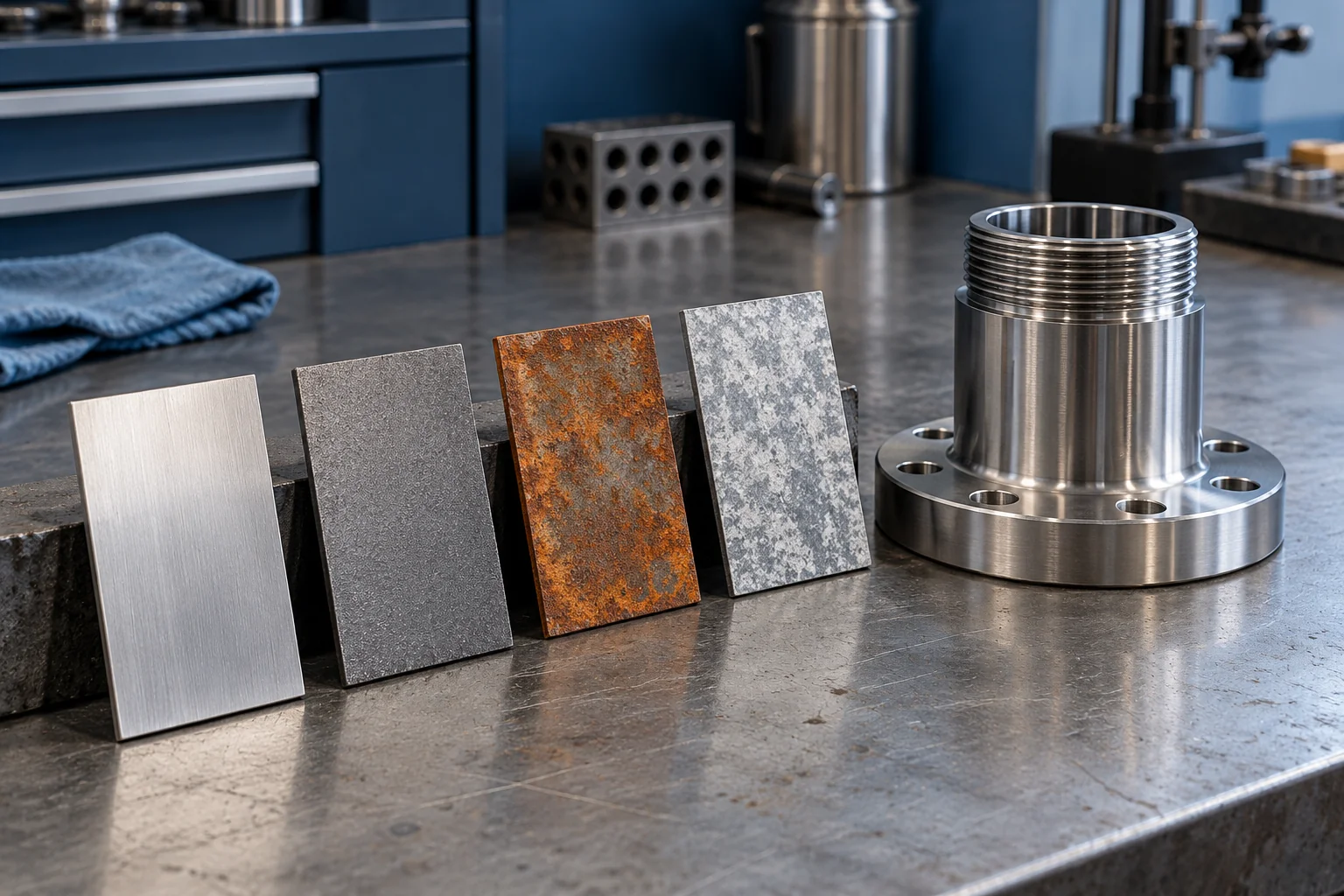
Stainless steel is not immune to corrosion. Grade, finish, chlorides, trapped moisture, contact with other materials and cleaning products can all matter. A photograph cannot establish remaining strength or the depth of damage.
Practical checks
- Photograph the whole component and the affected area with a scale.
- Record material evidence, process exposure and cleaning history.
- Look for deposits, crevices, dissimilar-metal contact and water retention.
- Agree inspection or material testing where the consequence of material loss is significant.
Record the finding against the actual part, machine or drawing revision. A useful check identifies both the observation and the conditions under which it was made, so another person can review it.
Common mistakes to avoid
- Do not polish away the evidence before documenting it.
- Do not infer structural acceptability from the colour or apparent size of a stain.
What to collect before a review
- Material designation
- Location and close photographs
- Exposure, cleaning and operating history
Send clear original files where available. Mark uncertain dimensions, missing information and the result you need. Separate confirmed requirements from assumptions instead of filling the gaps with guessed specifications.
The next decision
Decide whether cleaning, a material change, a design change or further inspection is needed. Critical components need an acceptance decision based on measured condition and applicable requirements.
Discuss this requirement
Crecer Grande can review the information you already have and confirm the feasible scope, evidence needed and commercial next step.
Send your requirement → Browse the libraryGeneral engineering guidance; equipment instructions and the applicable drawing or specification govern the actual work.