
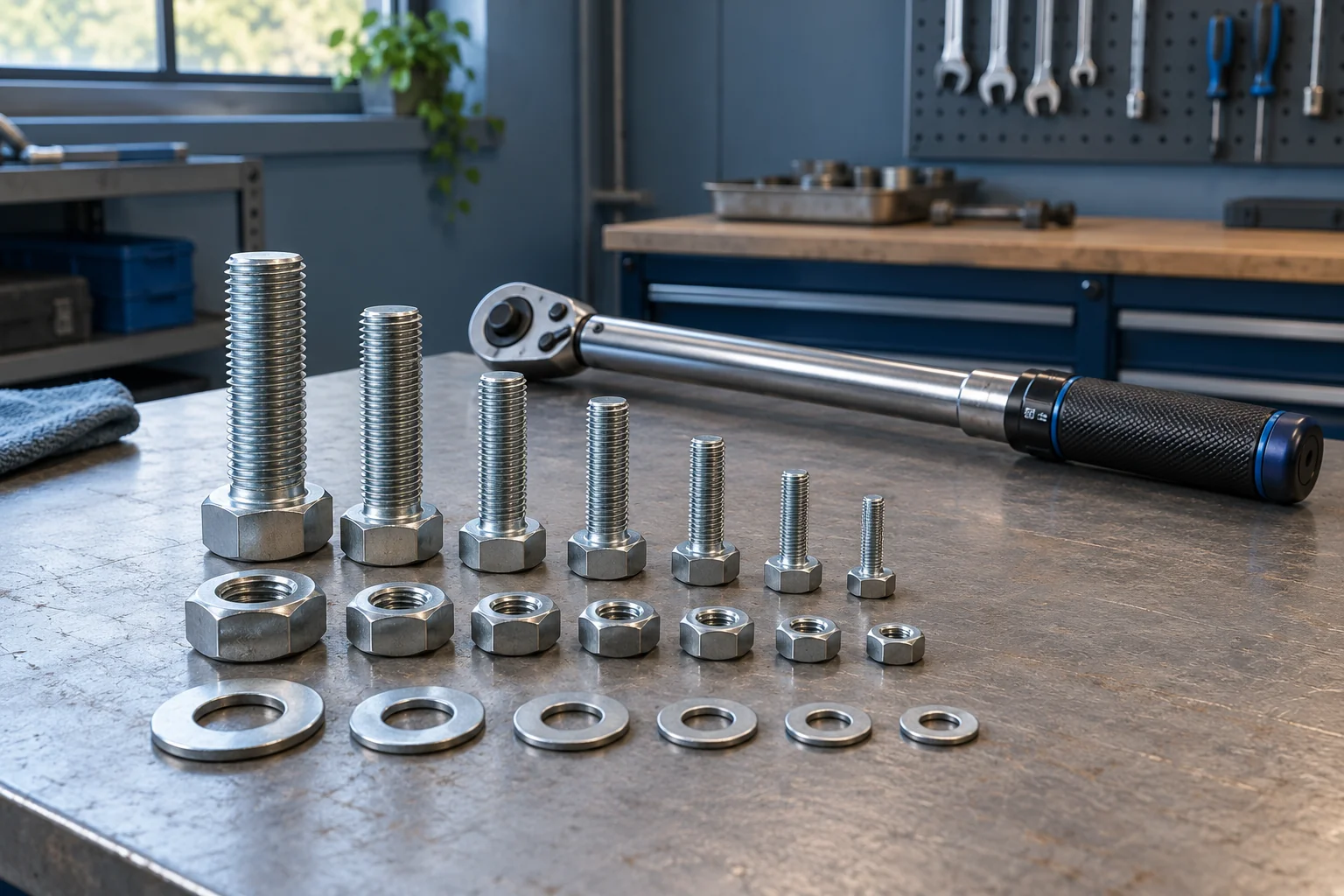
Lubrication and coatings change friction. Reusing a value intended for dry threads on lubricated fasteners can change preload substantially. A calibrated wrench does not compensate for an unsuitable value or a damaged joint.
Practical checks
- Confirm thread size, fastener grade, washer and mating material.
- Use the equipment or joint designer’s approved tightening procedure.
- Check lubrication, coatings, reused hardware and thread condition.
- Record the required sequence, tightening stages and tool calibration status.
Record the finding against the actual part, machine or drawing revision. A useful check identifies both the observation and the conditions under which it was made, so another person can review it.
Common mistakes to avoid
- Do not copy a generic internet torque table into a critical assembly without checking its assumptions.
- Do not keep tightening a joint that will not seat correctly; investigate alignment, debris or damaged threads.
What to collect before a review
- Joint drawing or photographs
- Fastener specification
- Approved torque procedure and surface condition
Send clear original files where available. Mark uncertain dimensions, missing information and the result you need. Separate confirmed requirements from assumptions instead of filling the gaps with guessed specifications.
The next decision
Use the documented joint requirement. If it is absent, review the joint before selecting torque, particularly for pressure equipment, lifting assemblies or other consequential connections.
Discuss this requirement
Crecer Grande can review the information you already have and confirm the feasible scope, evidence needed and commercial next step.
Send your requirement → Browse the libraryGeneral engineering guidance; equipment instructions and the applicable drawing or specification govern the actual work.