
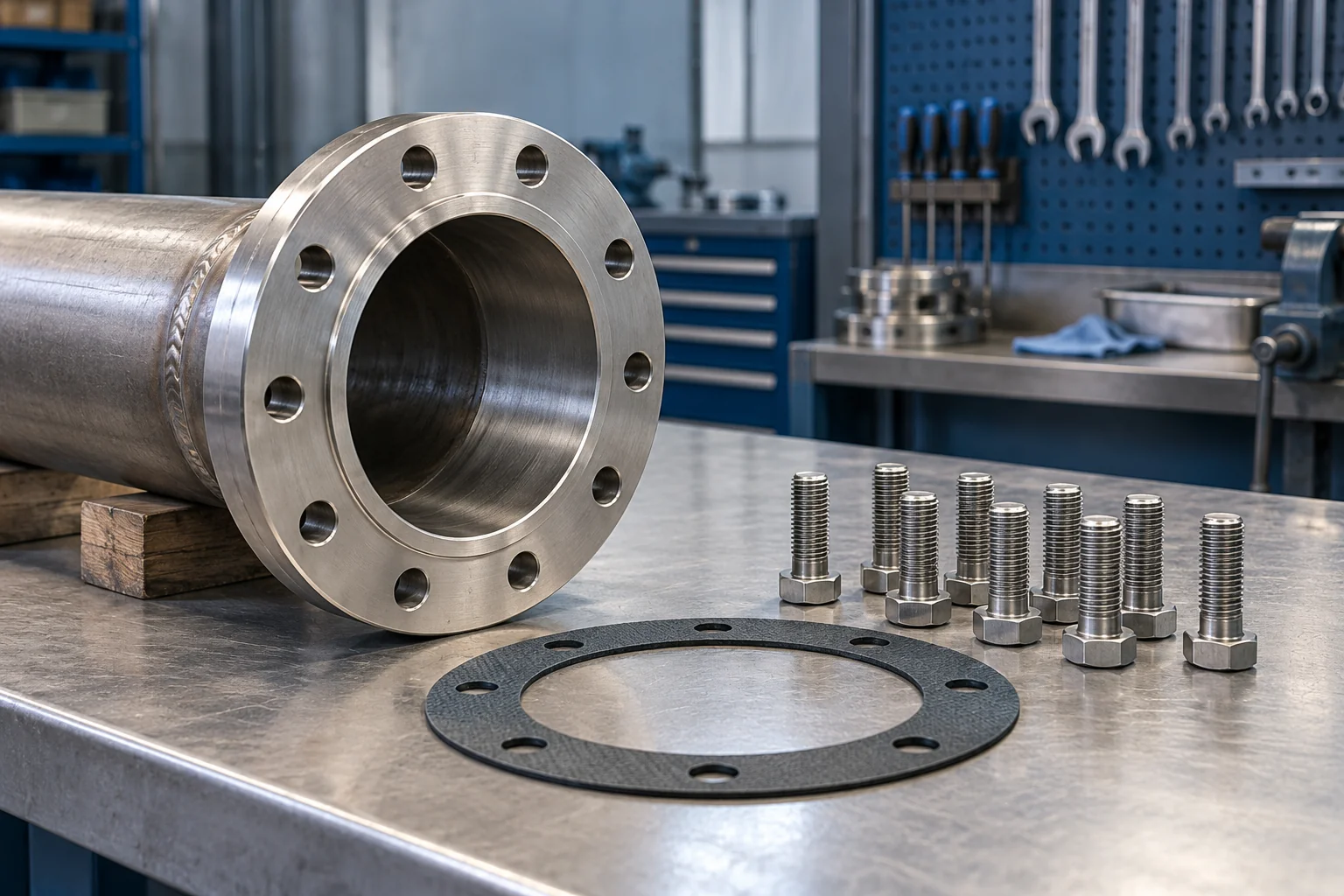
Flange facing condition and bolt loading are part of the seal. Replacing a gasket repeatedly will not correct a distorted flange, incompatible material or incorrect tightening practice.
Practical checks
- Identify the flange standard, facing type and relevant dimensions.
- Confirm fluid, normal duty and credible temperature or pressure variations.
- Inspect accessible sealing faces for damage under a safe isolation procedure.
- Specify gasket material, thickness and the approved assembly sequence.
Record the finding against the actual part, machine or drawing revision. A useful check identifies both the observation and the conditions under which it was made, so another person can review it.
Common mistakes to avoid
- Do not reuse a compressed gasket unless its manufacturer explicitly permits it.
- Do not add sealant or extra gaskets to compensate for an unexplained joint problem.
What to collect before a review
- Flange designation and dimensions
- Fluid and duty information
- Original gasket specification and leak history
Send clear original files where available. Mark uncertain dimensions, missing information and the result you need. Separate confirmed requirements from assumptions instead of filling the gaps with guessed specifications.
The next decision
Select the gasket as part of the complete rated joint. Hazardous fluids and pressure-containing equipment require the responsible engineering authority’s specification and test procedure.
Discuss this requirement
Crecer Grande can review the information you already have and confirm the feasible scope, evidence needed and commercial next step.
Send your requirement → Browse the libraryGeneral engineering guidance; equipment instructions and the applicable drawing or specification govern the actual work.