
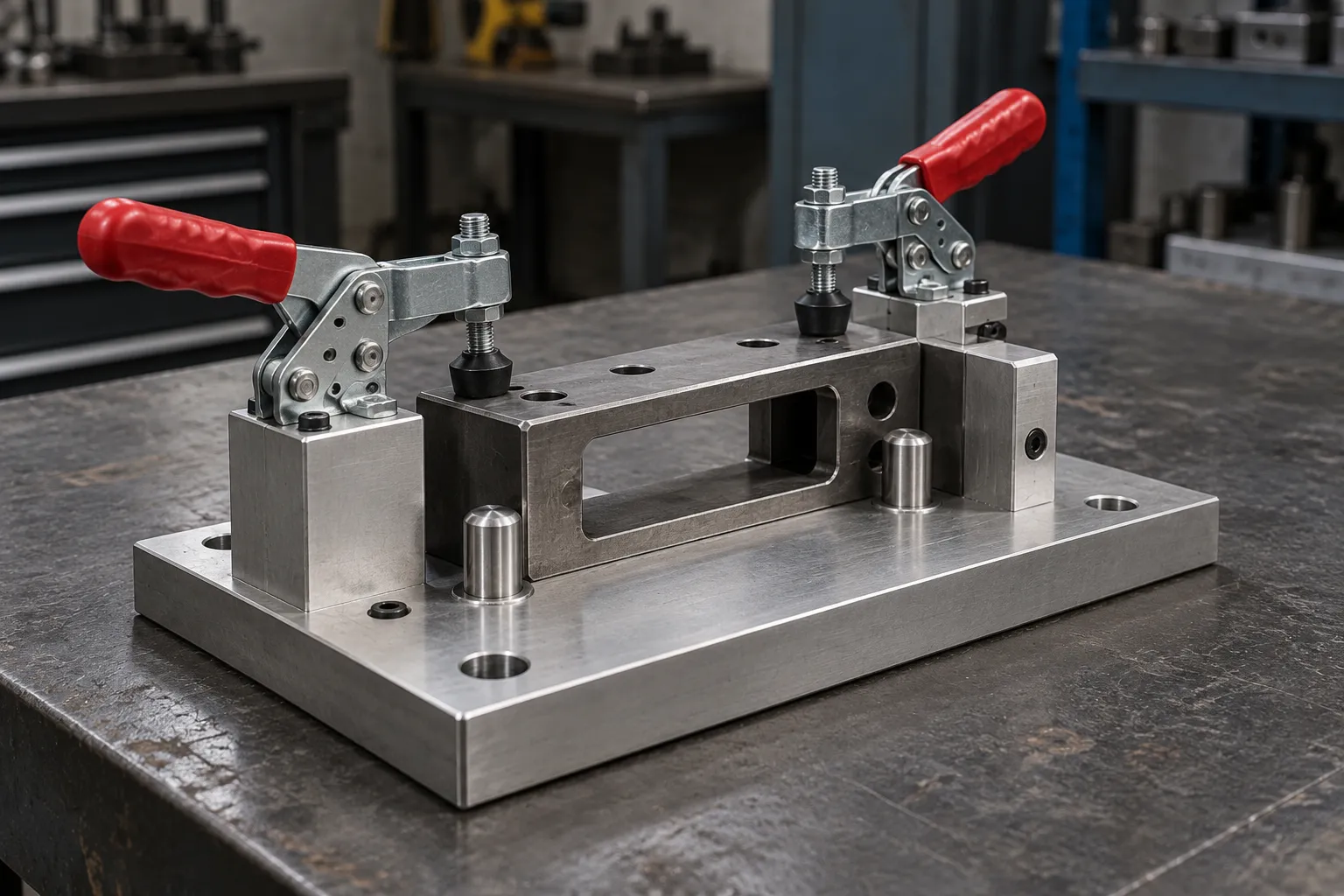
Clamps can hold a part in the wrong place just as firmly as the right one. A fixture also needs safe loading, tool access, chip clearance and a way to confirm that the part is seated correctly.
Practical checks
- Choose datums that represent the function and manufacturing operation.
- Check that the workpiece cannot rock or be loaded in the wrong orientation.
- Place clamps so they support the operation without bending weak sections.
- Review tool paths, clearance, cleaning and operator access.
Record the finding against the actual part, machine or drawing revision. A useful check identifies both the observation and the conditions under which it was made, so another person can review it.
Common mistakes to avoid
- Do not use excessive clamp force to compensate for poor location.
- Do not make the fixture so constrained that normal part variation prevents loading.
What to collect before a review
- Part model and drawing
- Operation and expected forces
- Batch size and critical dimensions
Send clear original files where available. Mark uncertain dimensions, missing information and the result you need. Separate confirmed requirements from assumptions instead of filling the gaps with guessed specifications.
The next decision
Trial the fixture with representative parts and inspect the output after unclamping. Repeated loading should produce the required result without relying on operator improvisation.
Discuss this requirement
Crecer Grande can review the information you already have and confirm the feasible scope, evidence needed and commercial next step.
Send your requirement → Browse the libraryGeneral engineering guidance; equipment instructions and the applicable drawing or specification govern the actual work.