
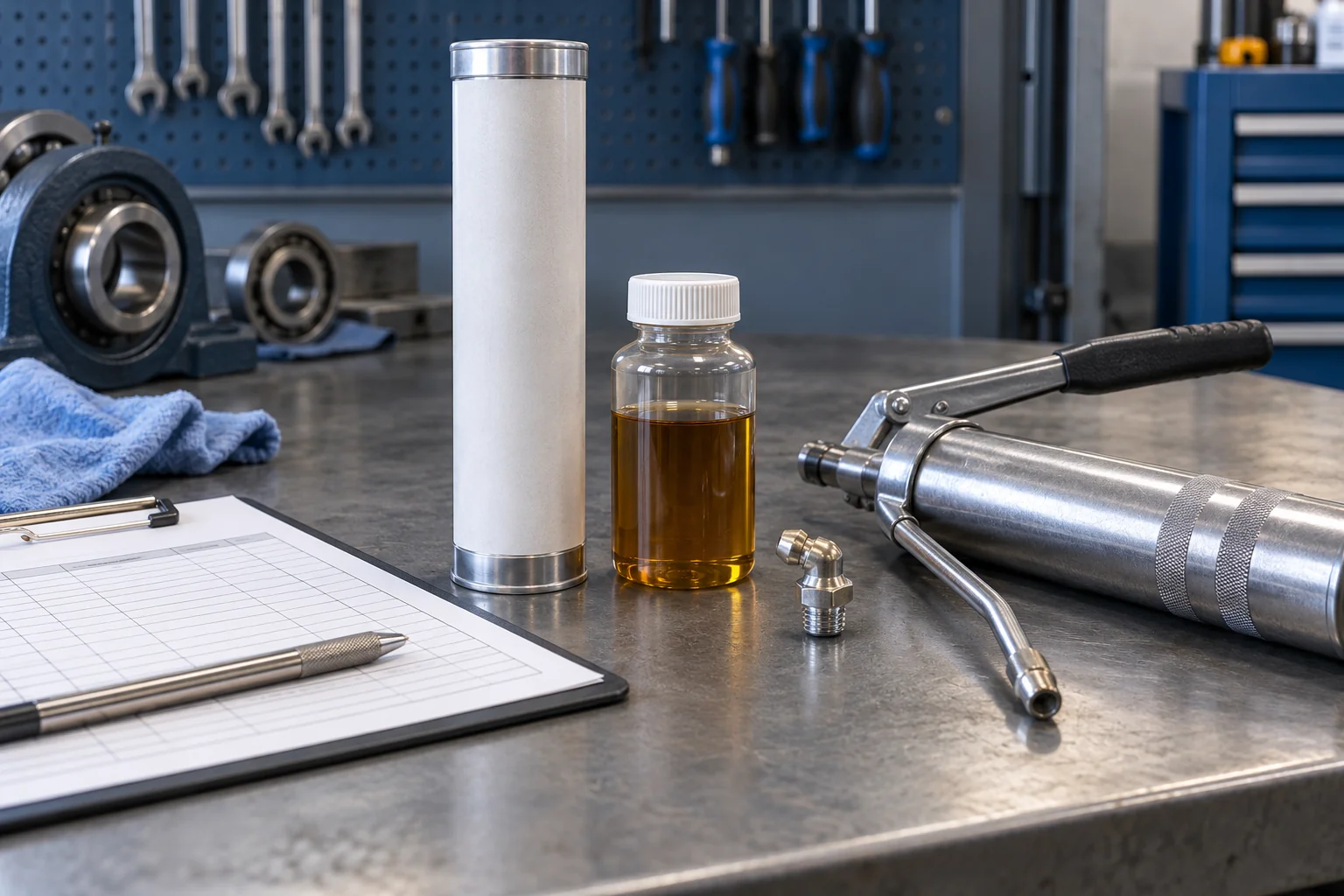
Over-lubrication, incompatible grease and contamination can all shorten service life. A good plan follows the equipment requirements and changes when operating speed, temperature, duty or the environment changes.
Practical checks
- List each lubrication point with an unambiguous machine reference.
- Record the specified lubricant and approved substitutions, if any.
- Define quantity and interval using equipment guidance and actual duty.
- Keep dispensing tools clean and log completion alongside abnormal observations.
Record the finding against the actual part, machine or drawing revision. A useful check identifies both the observation and the conditions under which it was made, so another person can review it.
Common mistakes to avoid
- Do not mix greases just because their colour is similar.
- Do not increase the quantity repeatedly to hide a seal leak or rising temperature.
What to collect before a review
- Equipment lubrication instructions
- Current product and usage records
- Duty cycle and environmental conditions
Send clear original files where available. Mark uncertain dimensions, missing information and the result you need. Separate confirmed requirements from assumptions instead of filling the gaps with guessed specifications.
The next decision
Agree a point-by-point plan, then review evidence from inspections and lubricant condition. Where specifications conflict or the current lubricant is unknown, resolve compatibility before changing products.
Discuss this requirement
Crecer Grande can review the information you already have and confirm the feasible scope, evidence needed and commercial next step.
Send your requirement → Browse the libraryGeneral engineering guidance; equipment instructions and the applicable drawing or specification govern the actual work.