
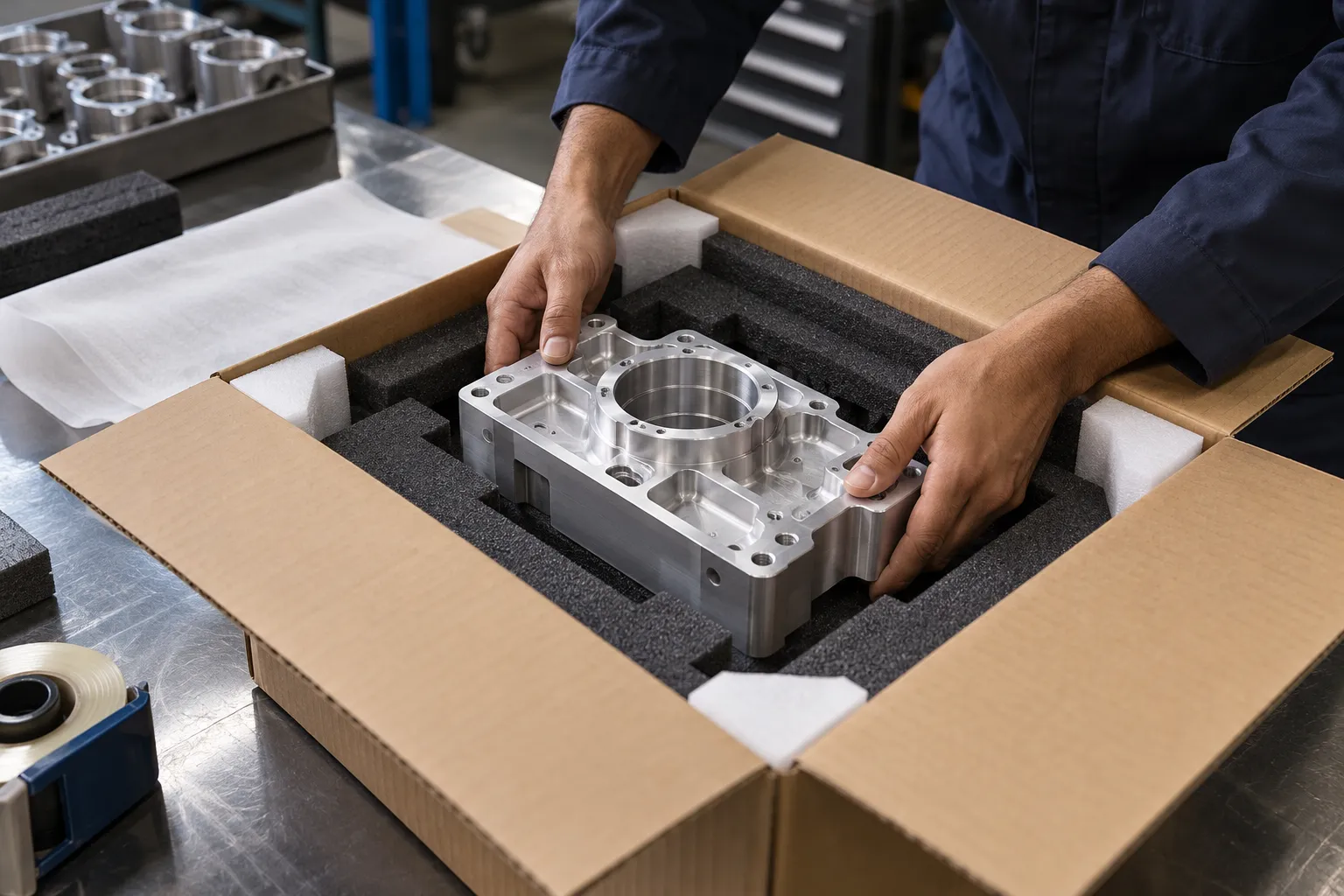
Movement, moisture and contact between parts can create damage that a generic outer box does not prevent. Materials used for protection should also suit the surface treatment and storage conditions.
Practical checks
- Identify exposed threads, sealing faces, sharp edges and delicate features.
- Prevent parts moving or contacting one another inside the package.
- Review moisture protection and compatibility with the surface finish.
- Keep part numbers, quantities, handling instructions and inspection records traceable.
Record the finding against the actual part, machine or drawing revision. A useful check identifies both the observation and the conditions under which it was made, so another person can review it.
Common mistakes to avoid
- Do not place adhesive directly on a critical optical or sealing surface.
- Do not seal moisture inside packaging and assume an outer wrap prevents corrosion.
What to collect before a review
- Part dimensions and weight
- Surface protection needs
- Transport, storage and identification requirements
Send clear original files where available. Mark uncertain dimensions, missing information and the result you need. Separate confirmed requirements from assumptions instead of filling the gaps with guessed specifications.
The next decision
Agree the packing method before dispatch, especially for finished or inspected components. Photograph the protected condition and record any special unpacking instructions.
Discuss this requirement
Crecer Grande can review the information you already have and confirm the feasible scope, evidence needed and commercial next step.
Send your requirement → Browse the libraryGeneral engineering guidance; equipment instructions and the applicable drawing or specification govern the actual work.