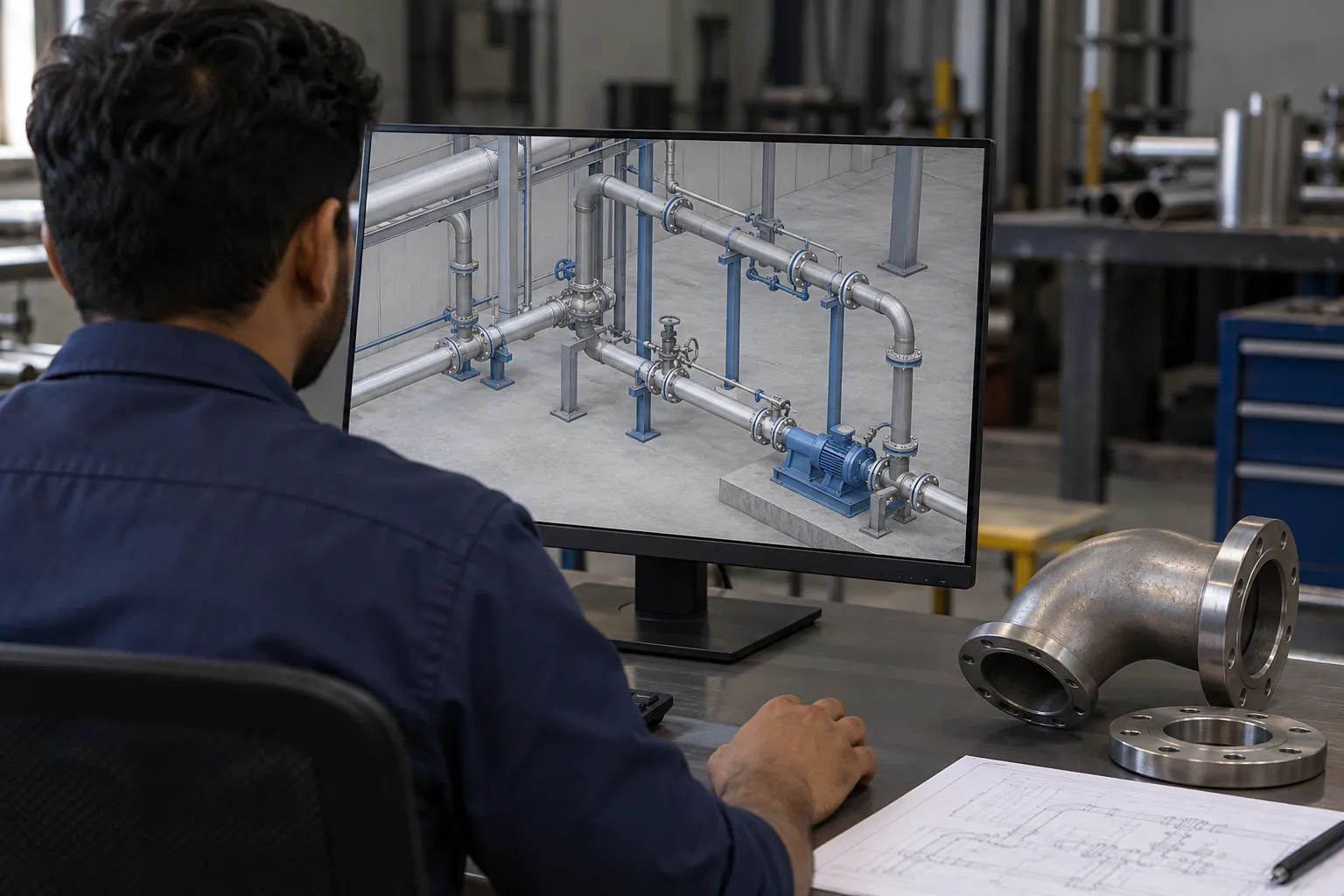
Flange clearance, valve access, equipment removal and thermal movement can compete for the same space. Pressure class, fluid compatibility and code requirements are engineering inputs, not details to add after routing.
Practical checks
- Confirm equipment connection data, line specification and service conditions.
- Review operating access, vents, drains and removal space.
- Identify support assumptions and interfaces that need stress or flexibility review.
- Coordinate the route with structure, cables, platforms and maintenance activities.
Record the finding against the actual part, machine or drawing revision. A useful check identifies both the observation and the conditions under which it was made, so another person can review it.
Common mistakes to avoid
- Do not use a neat 3D route as proof of pressure or mechanical adequacy.
- Do not constrain equipment nozzles with unreviewed pipe loads.
What to collect before a review
- Equipment layout and connection drawings
- Line list and service conditions
- Site constraints and applicable design requirements
Send clear original files where available. Mark uncertain dimensions, missing information and the result you need. Separate confirmed requirements from assumptions instead of filling the gaps with guessed specifications.
The next decision
Close the layout issues with the relevant disciplines before fabrication. Pressure-containing and hazardous systems require the applicable design authority, calculations and approval process.
Discuss this requirement
Crecer Grande can review the information you already have and confirm the feasible scope, evidence needed and commercial next step.
Send your requirement → Browse the libraryGeneral engineering guidance; equipment instructions and the applicable drawing or specification govern the actual work.