
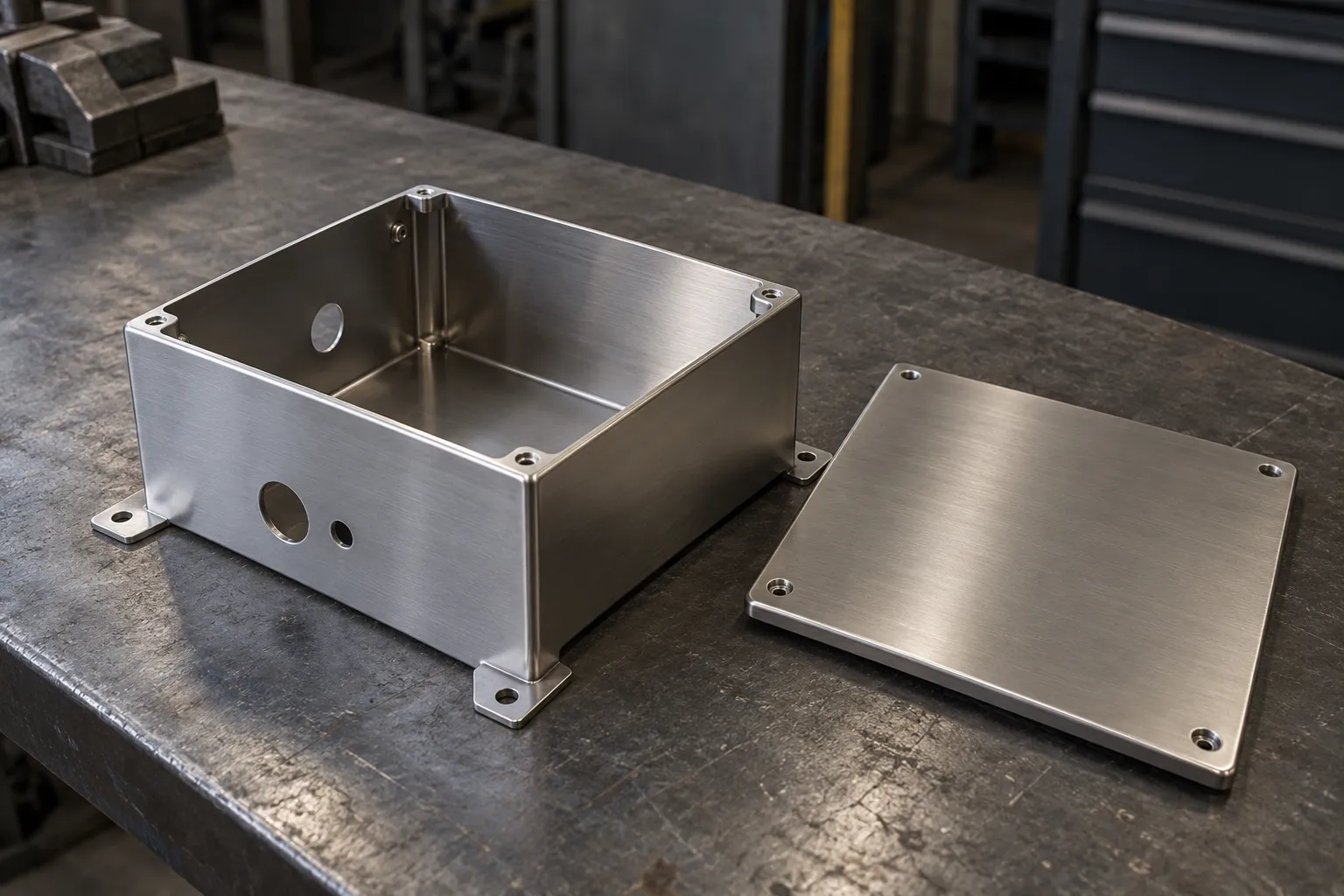
Punch and die geometry affect bend radius, access and the finished profile. Tooling suitability also depends on the machine limits and the process; it should be confirmed by the fabricator, not assumed from a generic sketch.
Practical checks
- Send the material grade, thickness and formed dimensions.
- Identify inside radii and short or obstructed flanges.
- Review the unfolding convention and which dimensions control acceptance.
- Check the proposed bend order for interference with previous bends.
Record the finding against the actual part, machine or drawing revision. A useful check identifies both the observation and the conditions under which it was made, so another person can review it.
Common mistakes to avoid
- Do not specify a sharp internal corner without discussing the forming process.
- Do not assume that a flat pattern from one setup will suit another machine unchanged.
What to collect before a review
- Formed drawing and model
- Material specification
- Critical dimensions and available flat pattern
Send clear original files where available. Mark uncertain dimensions, missing information and the result you need. Separate confirmed requirements from assumptions instead of filling the gaps with guessed specifications.
The next decision
Review the actual tool and bend sequence before cutting the blank. Where fit matters, approve the first formed part rather than relying only on the flat dimensions.
Discuss this requirement
Crecer Grande can review the information you already have and confirm the feasible scope, evidence needed and commercial next step.
Send your requirement → Browse the libraryGeneral engineering guidance; equipment instructions and the applicable drawing or specification govern the actual work.