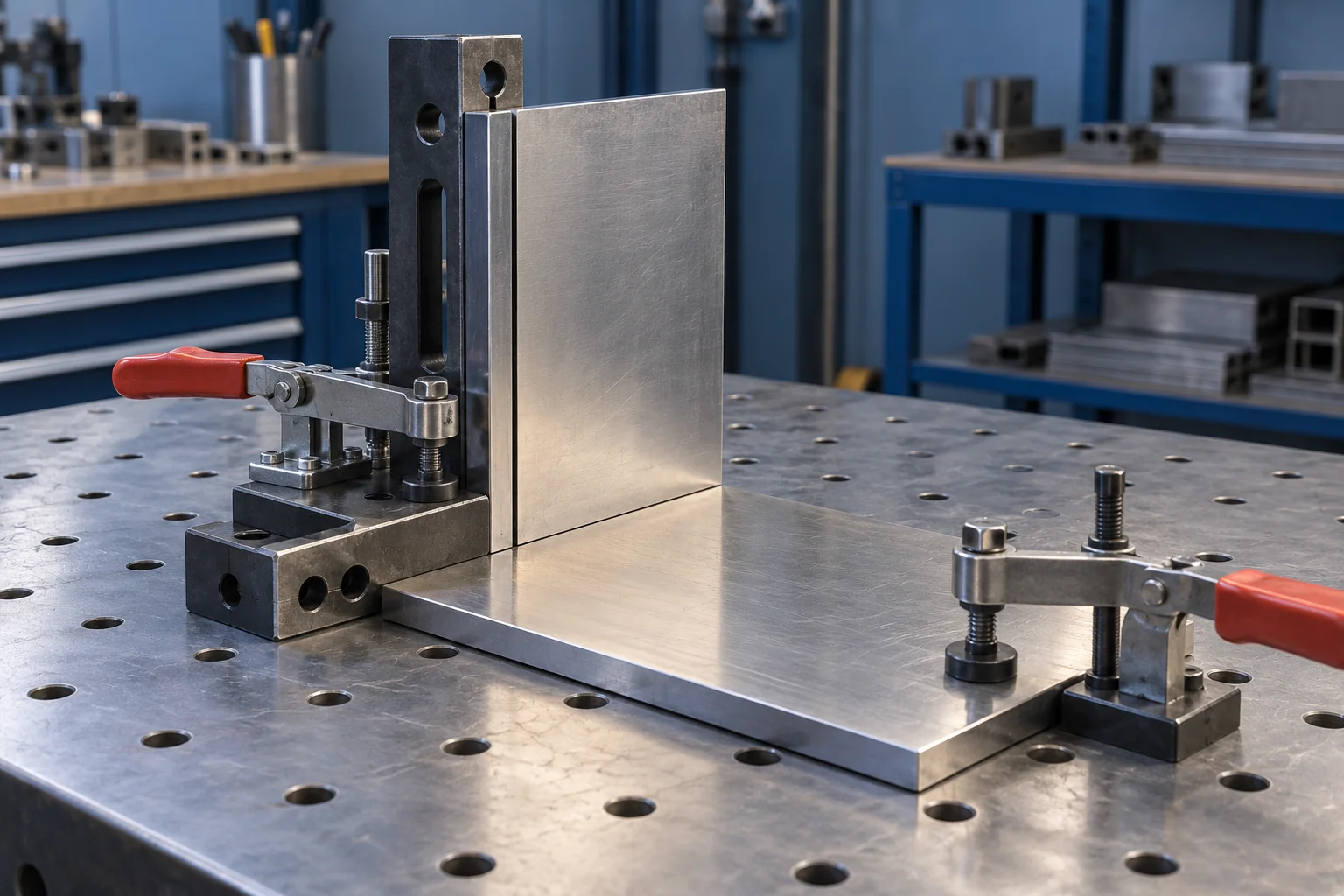
A neat-looking bead cannot compensate for an unsuitable joint design or inaccessible surface. The allowed preparation and gap depend on the material, thickness, process and qualified procedure where one applies.
Practical checks
- Confirm material grade, thickness and the approved joint detail.
- Check cleanliness, edge preparation and access along the full weld path.
- Measure fit-up against the specified tolerances before clamping.
- Review tack positions and how the fixture allows the part to contract.
Record the finding against the actual part, machine or drawing revision. A useful check identifies both the observation and the conditions under which it was made, so another person can review it.
Common mistakes to avoid
- Do not assume that more weld metal will correct an excessive joint gap.
- Do not treat a visual sample as qualification for a pressure or safety-critical weld.
What to collect before a review
- Joint drawing
- Material and thickness
- Weld length, finish and inspection requirements
Send clear original files where available. Mark uncertain dimensions, missing information and the result you need. Separate confirmed requirements from assumptions instead of filling the gaps with guessed specifications.
The next decision
Agree the joint preparation and inspection scope before work begins. Code-governed or consequential welds require the applicable qualified procedure, personnel and acceptance criteria.
Discuss this requirement
Crecer Grande can review the information you already have and confirm the feasible scope, evidence needed and commercial next step.
Send your requirement → Browse the libraryGeneral engineering guidance; equipment instructions and the applicable drawing or specification govern the actual work.