
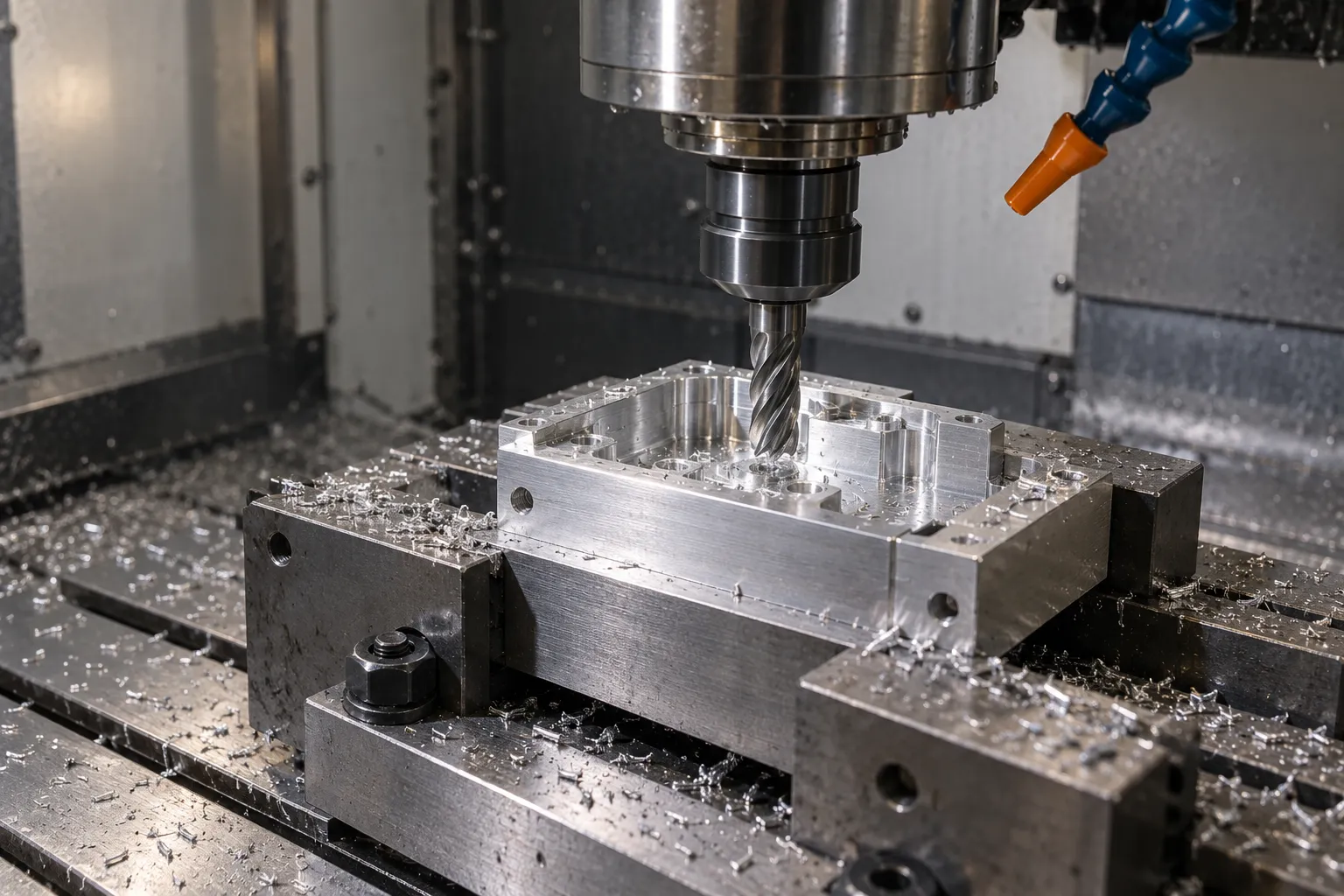
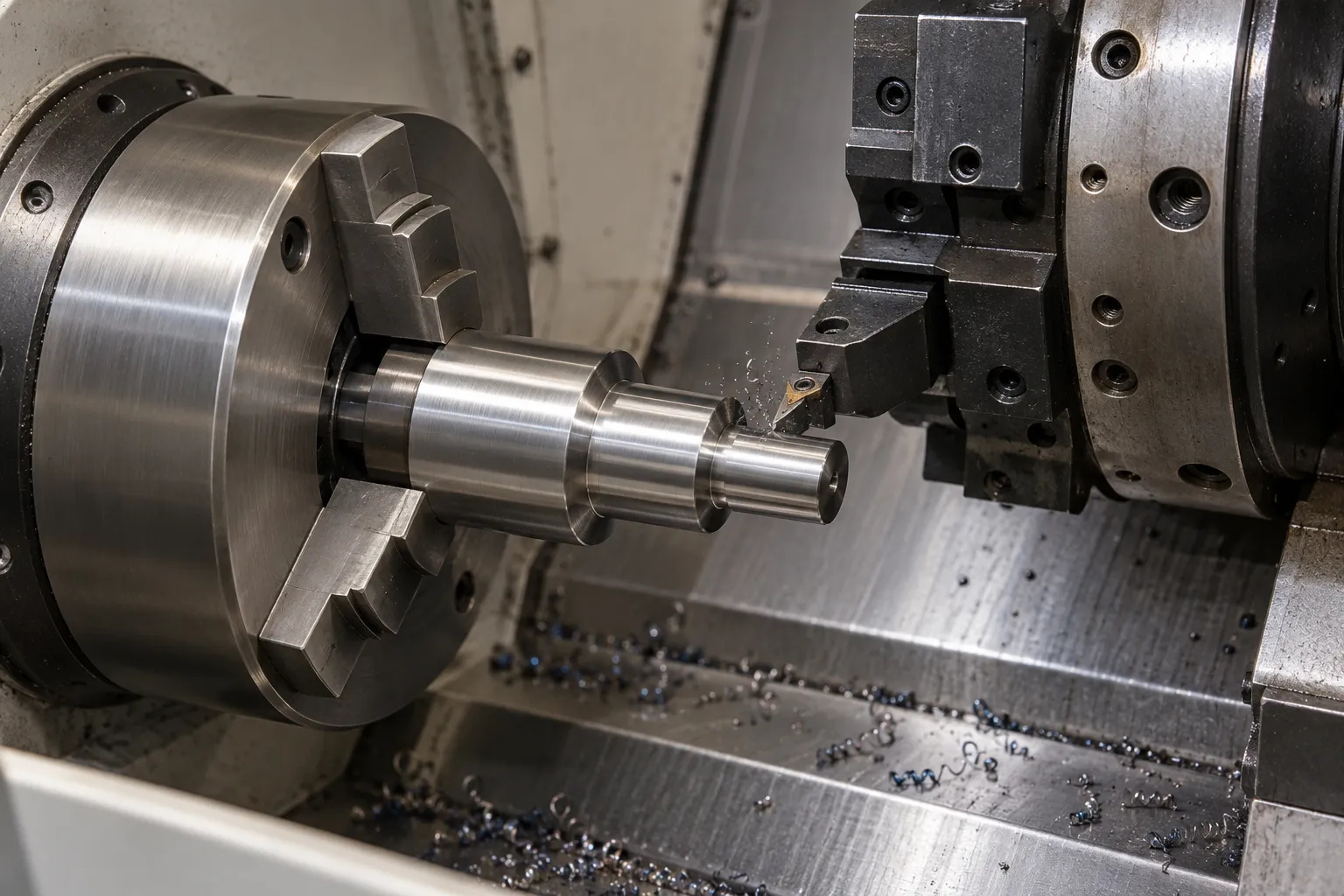
Spindle RPM is derived from cutting speed and cutter diameter. Table feed is then derived from feed per tooth × RPM × number of effective cutting teeth.
Four quantities you should keep separate
- Cutting speed (vc): surface speed at the cutting edge, usually m/min.
- Spindle speed (n): revolutions per minute.
- Feed per tooth (fz): chip load per effective cutting edge.
- Table feed (vf): programmed feed rate, usually mm/min.
Example
If a 10 mm end mill is to run at 120 m/min, the calculated spindle speed is approximately 3820 rpm. With a 4-flute cutter and 0.04 mm/tooth chip load, table feed is approximately 611 mm/min.
Why copying someone else’s RPM can fail
The correct cutting condition depends on workpiece material, hardness, cutter grade/coating, diameter, radial/axial engagement, rigidity, coolant strategy and machine limits. Use the cutting-tool supplier’s recommended starting range and adapt using measured tool life and part quality.
Signs that the process needs review
- Chatter or vibration.
- Rapid flank wear/chipping.
- Built-up edge.
- Excessive spindle load.
- Poor finish or dimensional drift.
- Chips that are powdery, blue/overheated or not evacuating.
Shop-floor discipline
Record the tool, holder, stick-out, material, operation, vc/fz, depth/width of cut and result. A repeatable process sheet is more valuable than a single “magic RPM”.
This article is general guidance for preliminary engineering and shop-floor understanding. The drawing, applicable standard, machine/tooling OEM instructions, process-specific safety requirements and qualified engineering judgment take priority.